Arcfox T1: Into The Thick of It





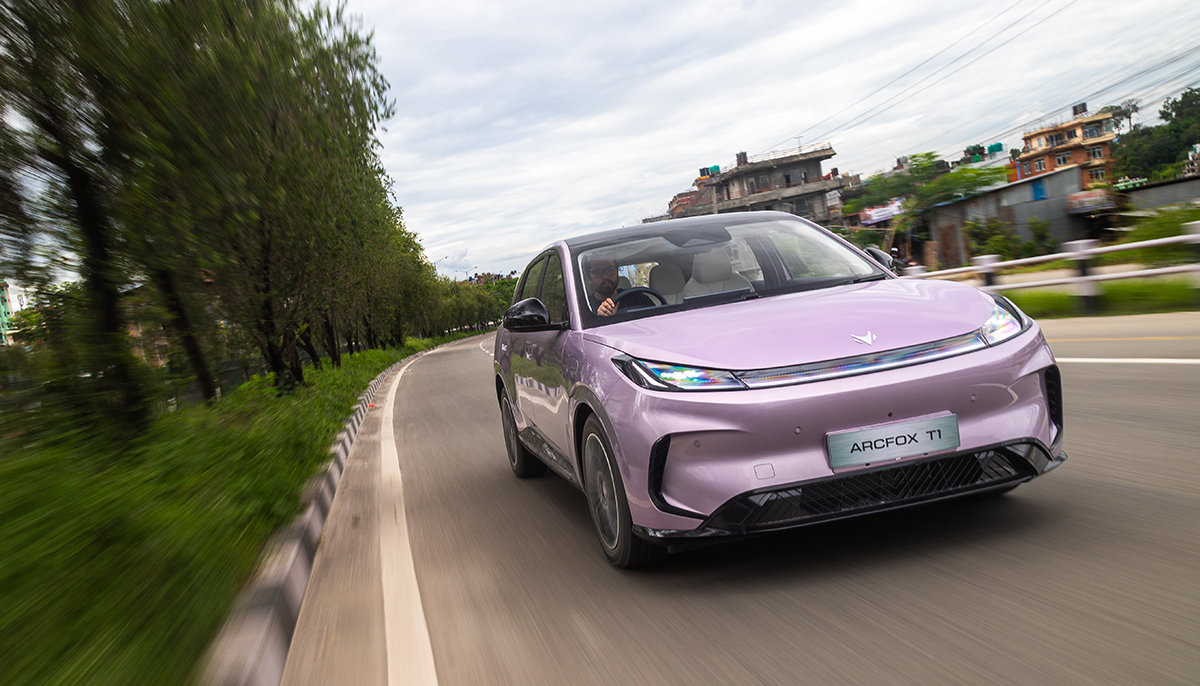
The Arcfox T1 finds itself in tough competition, but with a compact footprint, a surprisingly spacious cabin and a long list of equipment, it looks well equipped to duke it out in one of Nepal's most competitive EV segments.
Nepal's electric-car market has reached an interesting stage. EVs always had to make do with a few compromises when they first came out. Perhaps it was range, perhaps performance, perhaps equipment, or simply the fact that it came out of China. That is becoming increasingly difficult to say today.
Cars in the Rs. 30–40 lakh bracket are now arriving with large screens, sophisticated driver assistance systems, decent-sized batteries, fast charging and enough space to serve as a family's primary car. All with very little room for compromise.

The Arcfox T1 is the latest entrant into this increasingly crowded space, with prices ranging from Rs. 34.96 lakh for the LV2 to Rs. 37.96 lakh for the LV3. On paper, it looks like a lot of car for the money. But specifications have a habit of looking rather more impressive on paper than they do once you have lived with a car.
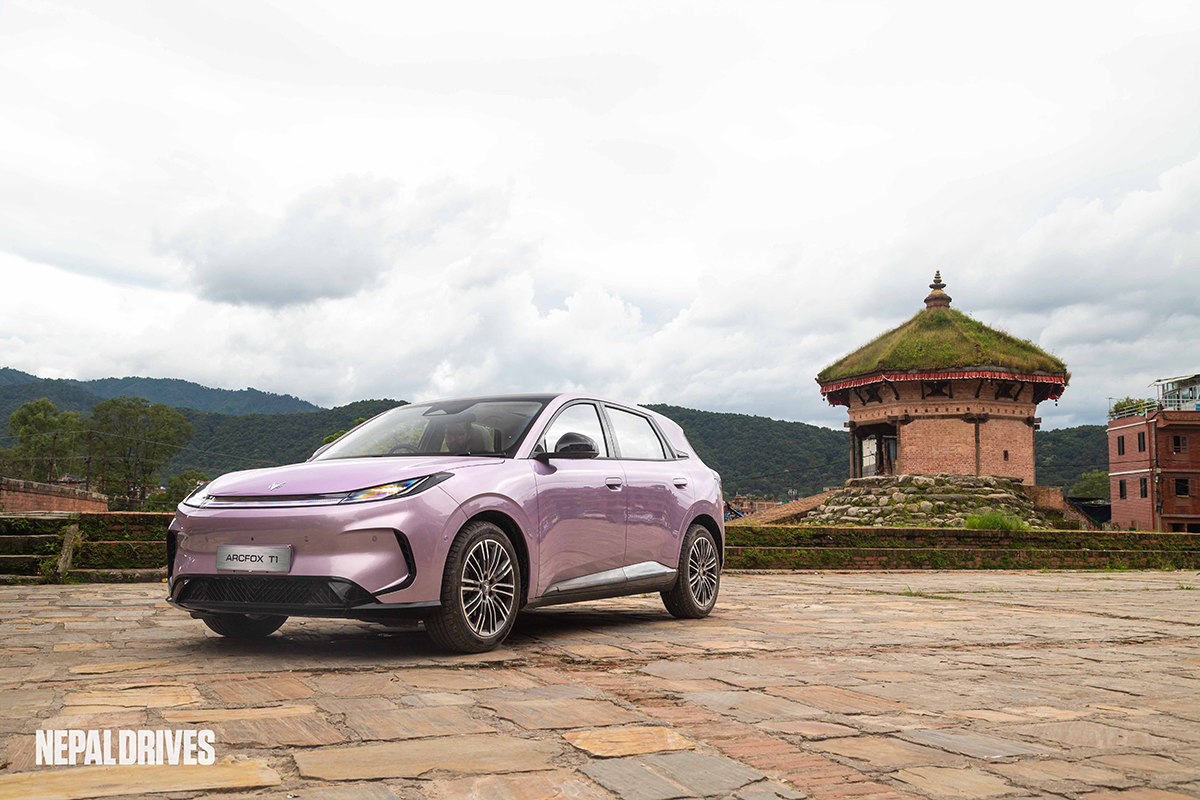
So what is the T1 actually like?
EXTERIOR
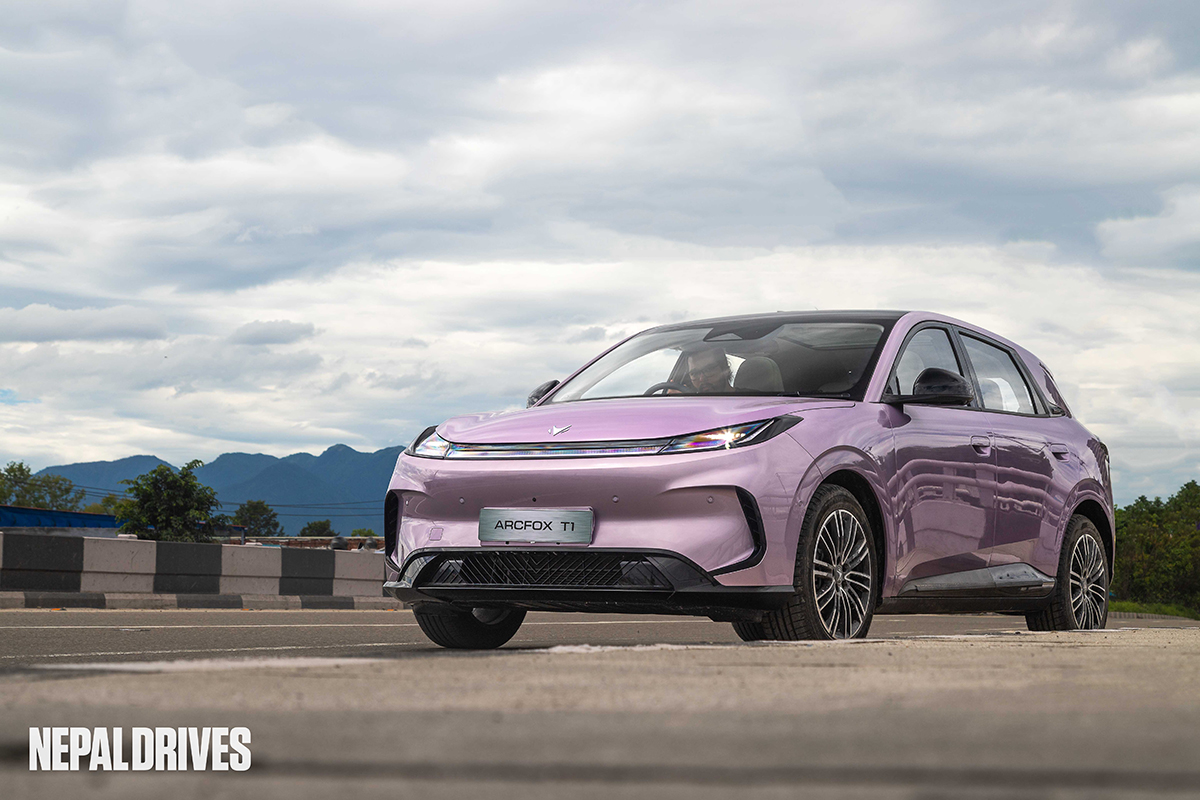
Arcfox describes the T1 as a compact electric crossover, and that is probably the most accurate description. It has the upright stance and visual bulk of an SUV, but its proportions are closer to those of a large hatchback.
It measures 4,337 mm in length, 1,805 mm in width and 1,573 mm in height, with a 2,750 mm wheelbase. On the roads of Nepal, it feels easy to drive without feeling like a small car. Far from it.
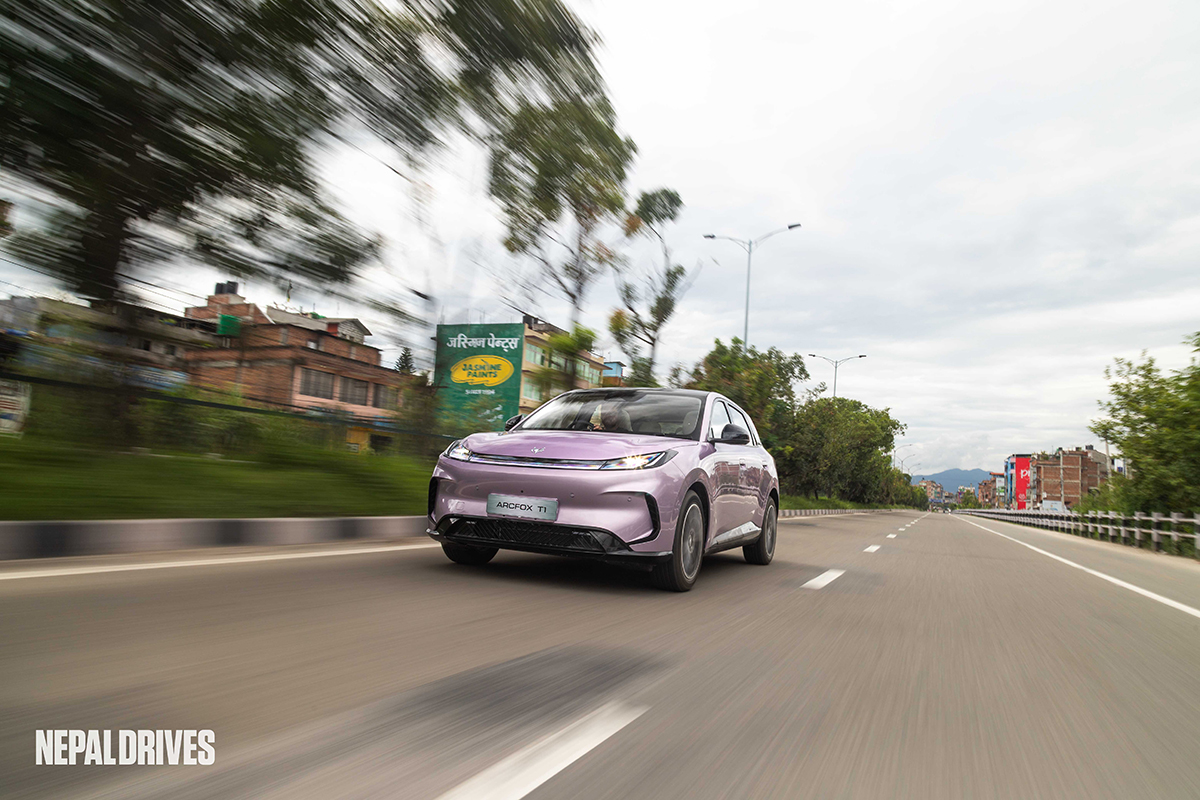
The design itself is restrained. The front is almost entirely closed off, as you would expect from an EV, while slim lighting elements give the T1 a fairly distinctive face. There is a deliberate lack of unnecessary detailing, and the smooth surfaces, flush door handles and relatively clean profile give it a contemporary appearance.
The clean profile gives it a contemporary appearance, and there is enough restraint here to make the T1 look more upmarket than its price suggests.
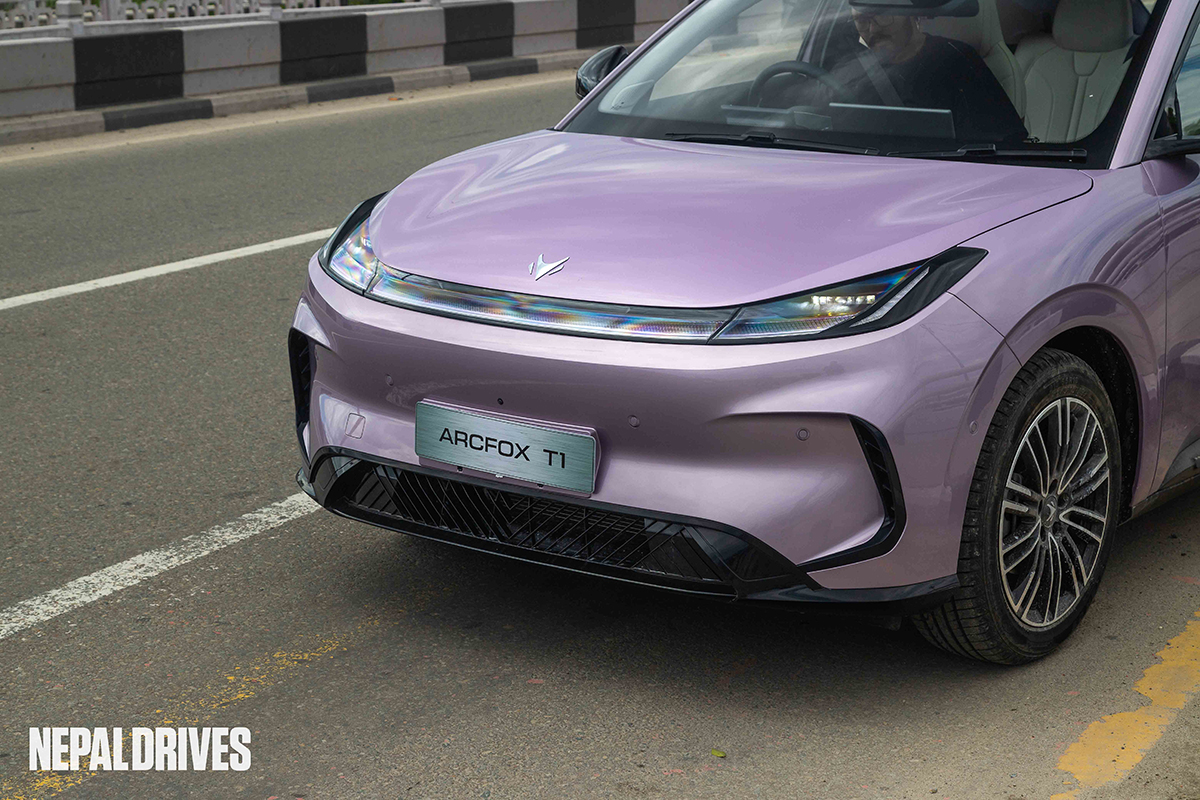
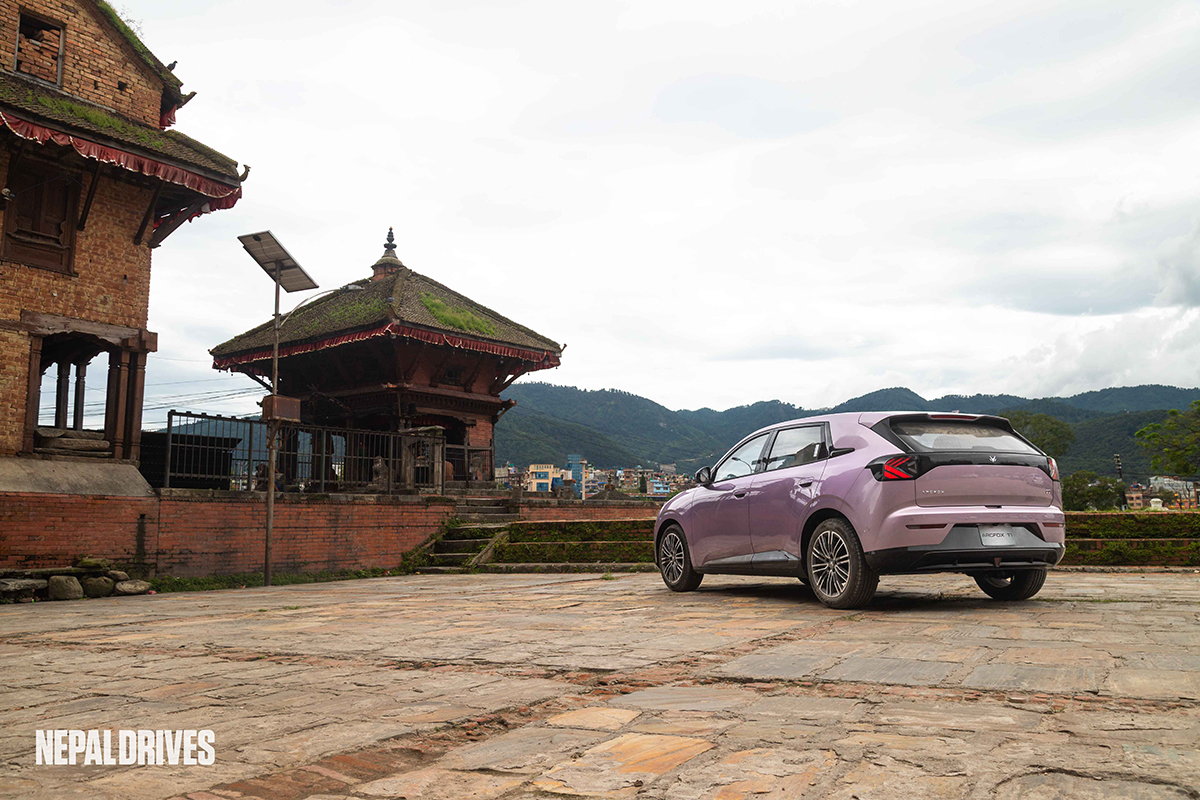
The T1 looks modern without falling into the trap of making every surface complicated simply to prove that it is an electric car. At the rear, a full-width lighting element gives the car some visual dimension, while the tailgate and bumper are fairly upright.
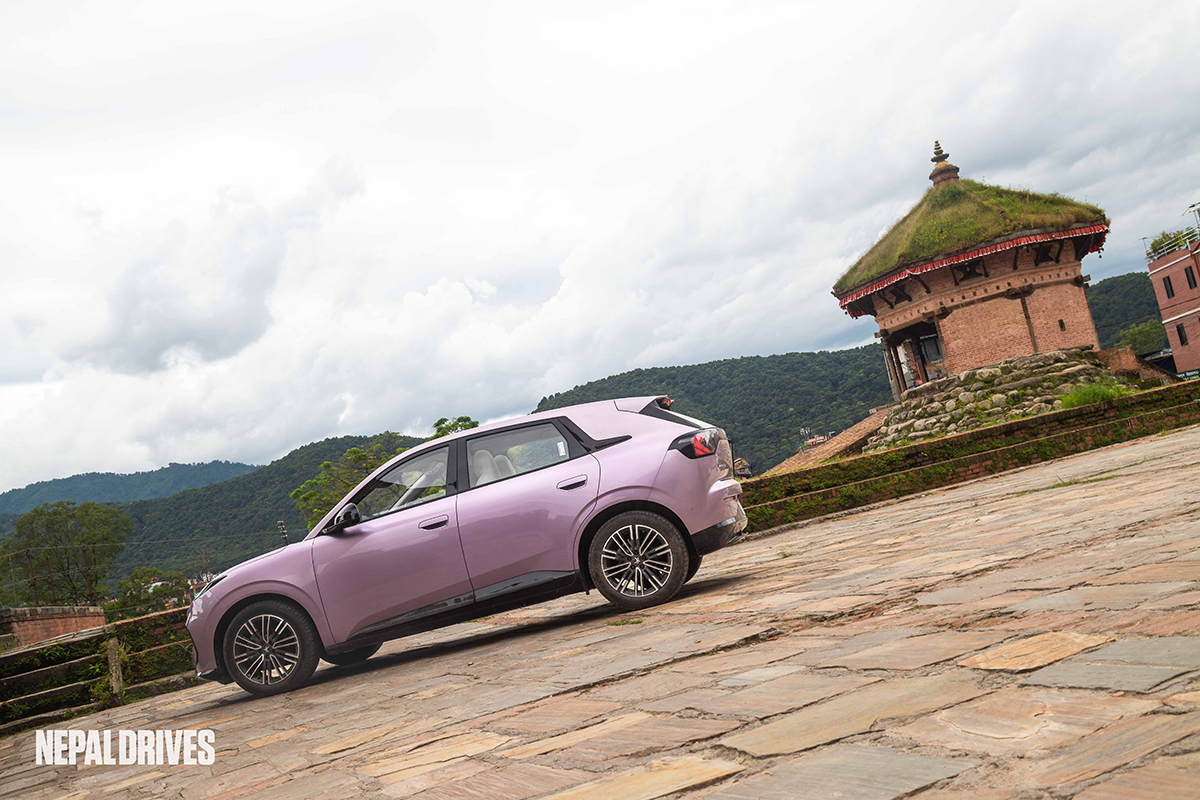
Ground clearance is one of the areas where the Nepal-spec car differs between variants. The local specification sheet lists 167 mm for the LV2 and 181 mm for the LV3. The difference appears to be related to the different wheel and tyre setup, although the specification sheet does not clarify exactly what accounts for the increase.
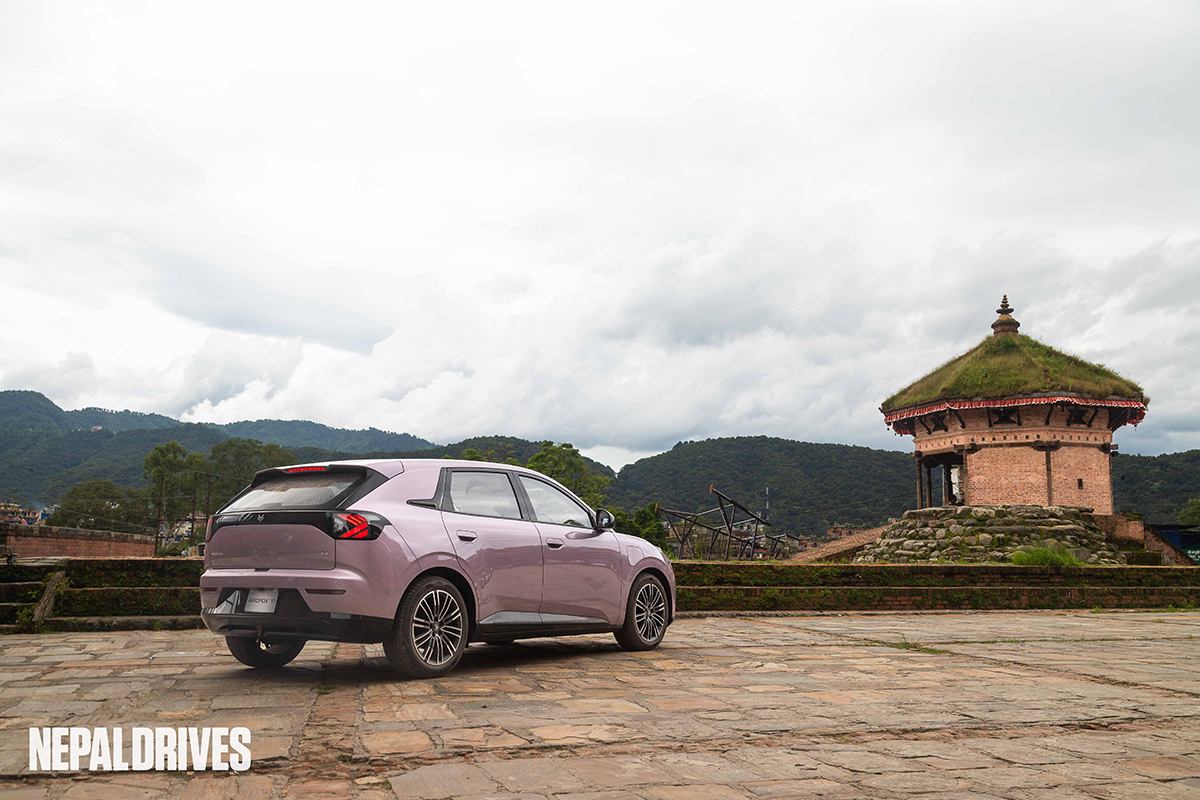
That makes the LV3 particularly well suited to Nepal's roads. The extra clearance won't turn the T1 into an off-roader, but it does give you more confidence when dealing with broken roads, steep ramps and the sort of speed breakers that seem to have been designed for SUVs rather than hatchbacks.
INTERIOR AND FEATURES
The T1's cabin is where Arcfox has clearly concentrated much of its effort. The dashboard is dominated by a 15.6-inch HD touchscreen, accompanied by a digital instrument display. The layout is clean and relatively minimalist, with most functions being pushed into the screen rather than spread across a sea of physical buttons.
You also get a pretty comprehensive list of equipment. The T1 comes with Apple CarPlay, voice control, a six-speaker audio system and a 66W front charging port, while rear passengers get a USB Type-C port.
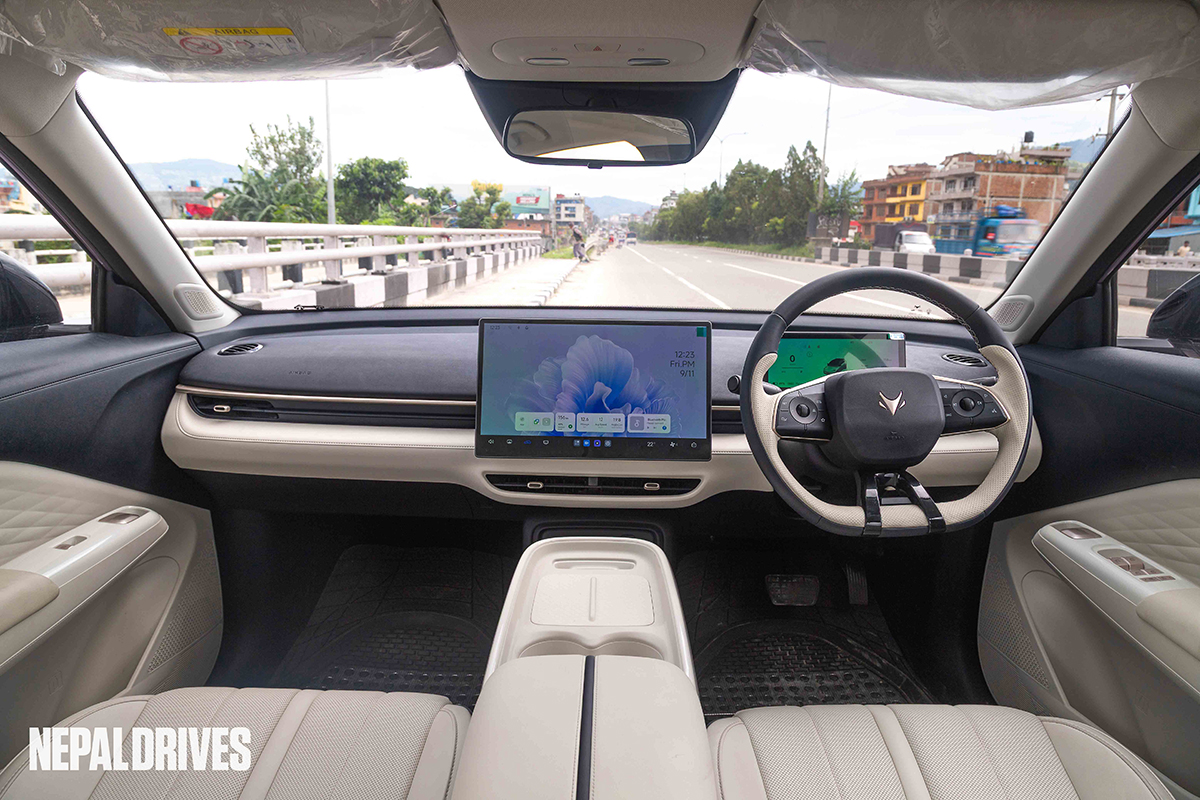
The front seats are heated and ventilated, and there is even a panoramic sunroof. The only notable omission is a wireless charger, but honestly, we're not complaining. Watching your phone turn into a hand warmer while charging wirelessly isn't exactly our idea of a useful feature.
Still, that is a considerable amount of equipment for a car sitting in the mid-Rs. 30 lakh range. The material quality, however, doesn't quite match the specification sheet.
There are plenty of hard plastics around the cabin, and while the overall presentation is modern, this isn't an interior that will have you confusing the T1 with a luxury car. The quality is perfectly acceptable for the price, but some of the surfaces feel more functional than luxurious.
Where the T1 does impress is space. The long wheelbase gives the cabin a surprisingly generous amount of room, particularly in the rear. The car's exterior dimensions don't immediately suggest that there will be this much space inside, but the packaging is clever.
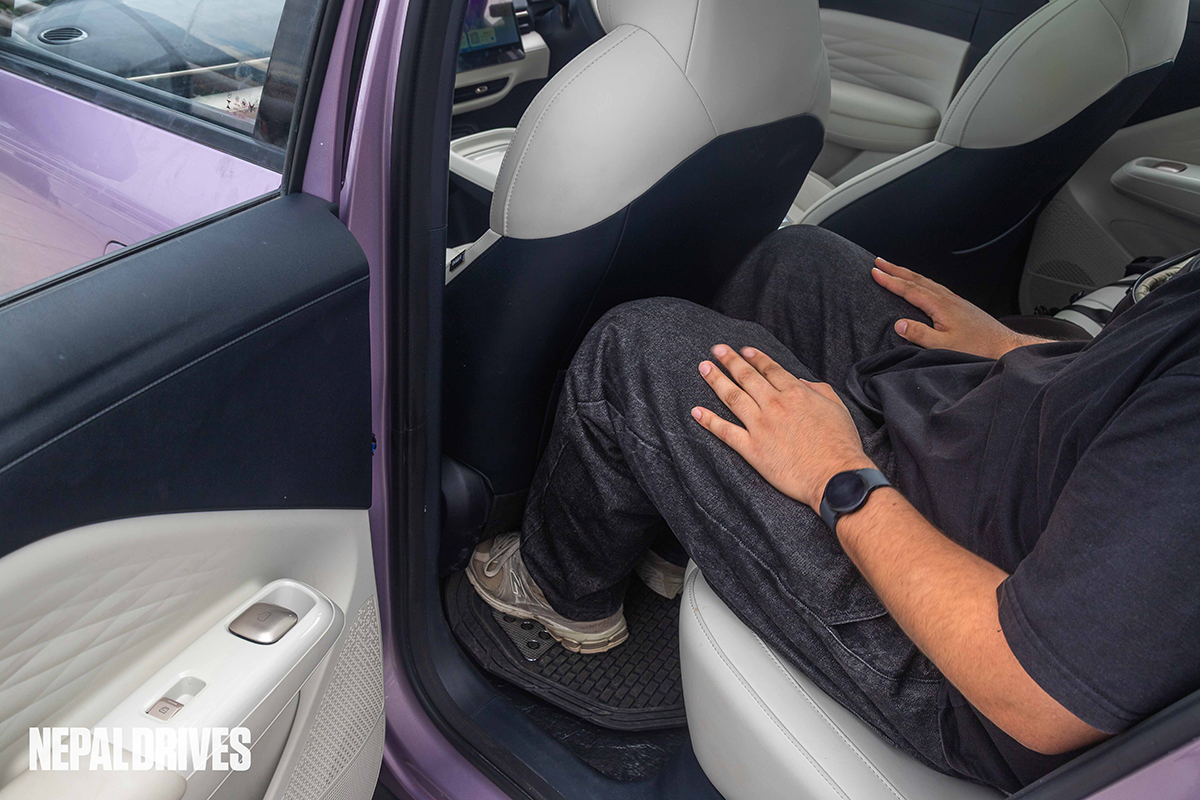
This is a car that can comfortably be used for the daily commute, but it also has enough room to work as a family car rather than simply an urban runabout.
The equipment continues into the safety systems. There are four airbags, ABS, EBD, ESP, hill control, front and rear parking sensors, an electronic parking brake and reverse path tracking. The car also gets automatic parking and lane departure warning, while the higher-specification equipment adds further driver assistance features.
The 360-degree camera is particularly useful in a car like this. With modern cars getting wider and Kathmandu's parking spaces remaining stubbornly unchanged, being able to see what is happening around the car is becoming less of a luxury and more of a genuine convenience. The T1 takes it a step further with their intelligent parking assist.
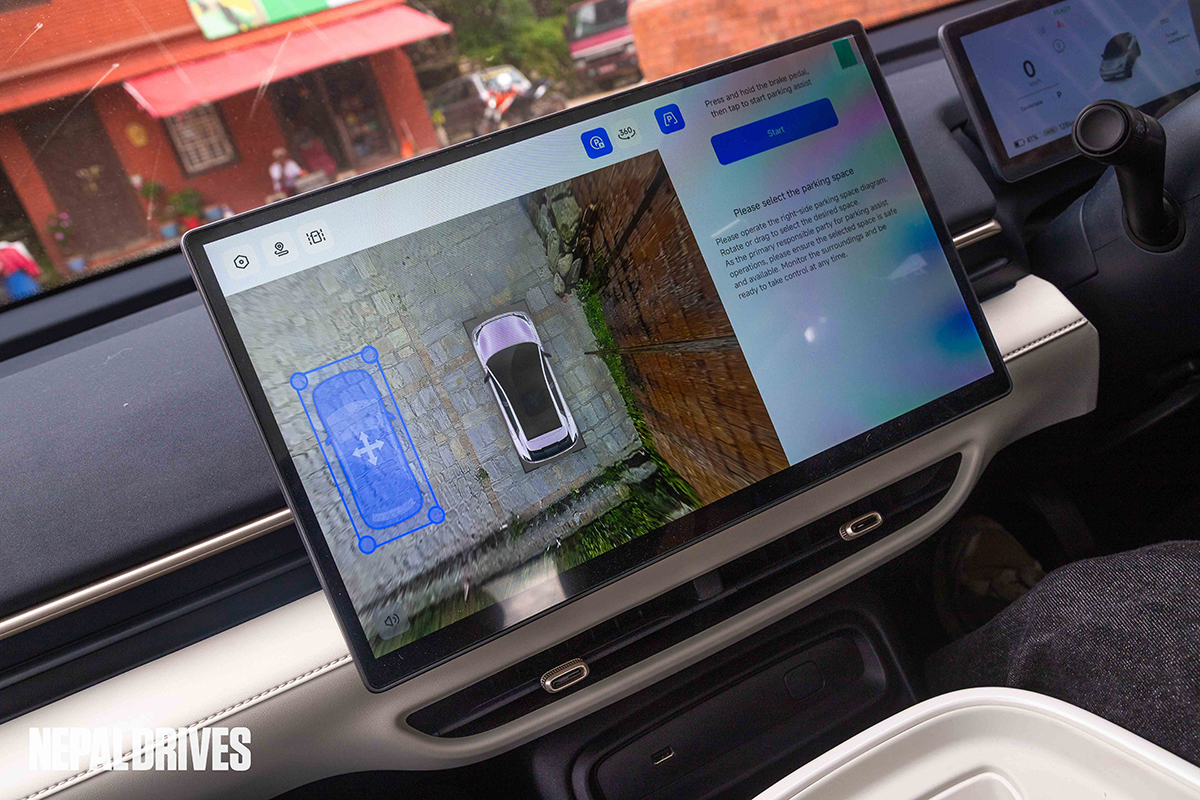
Tap an empty parking spot on the display and the car will park itself in the desired spot. Sitting in a car that is driving itself can be a little unnerving at first, but the claimed 95%+ parking success rate does make the system a little easier to trust.
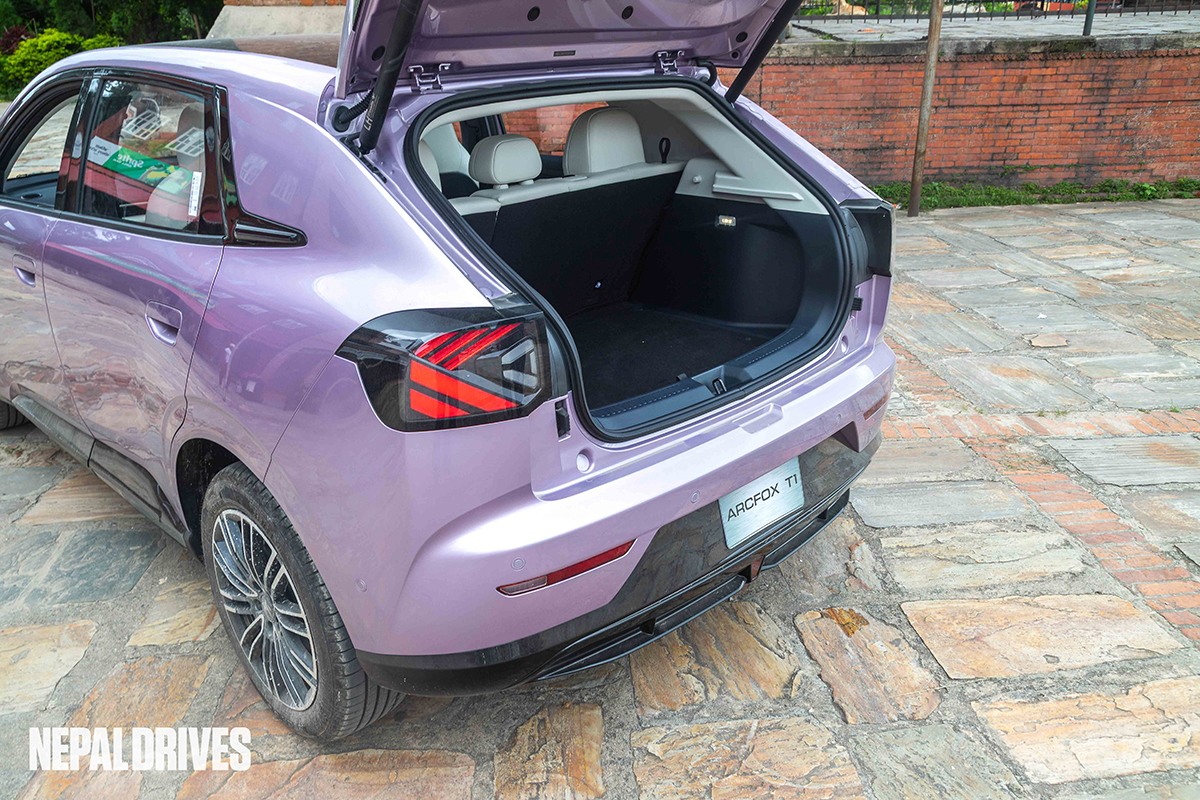
The boot space is also substantial with up to 1352L of space and a 74L hidden sunken storage compartment. No frunk though.
PERFORMANCE & RANGE
The Arcfox T1 gets a 70 kW electric motor producing 170 Nm of torque, with a claimed top speed of 140 km/h. It is paired with a 42.3 kWh LFP battery.
Around town, the motor provides enough response to make the car feel perfectly comfortable in traffic. As with most EVs, the immediate delivery of torque means the T1 doesn't feel sluggish when pulling away from a junction.
Having said that, it isn't a car built for outright performance. There are faster cars in the market, but on Nepal's roads, you will find that the T1 is more than adept.
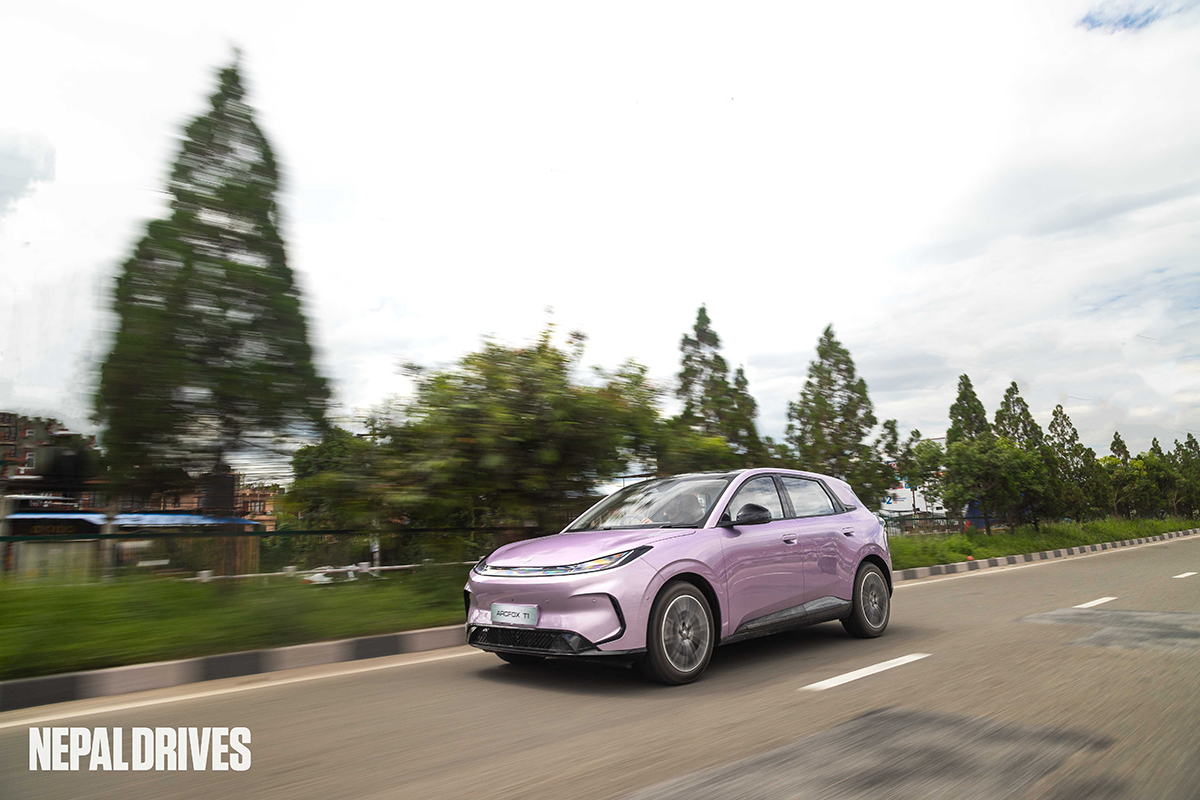
The steering is light and easy, making the car particularly undemanding around town. There isn't a huge amount of feedback coming through the wheel, but manoeuvring through tight streets and parking spaces requires little effort. It felt a little too light for us at times, but thankfully you get the option to beef up steering feedback, although that takes a little fiddling with the driving modes.
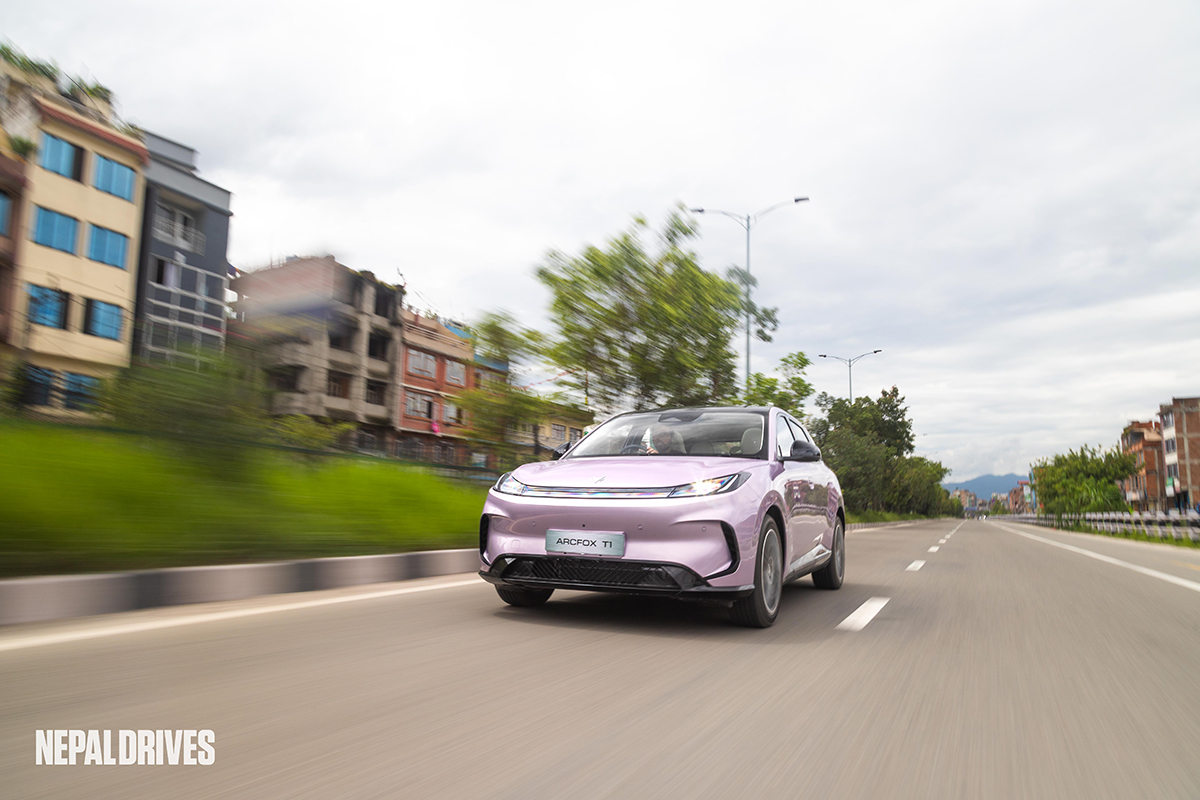
The driving modes — Eco, Comfort, Sport and Personalised — allow the driver to alter the car's response, although selecting Sport doesn't fundamentally change the character of the T1. The suspension is similarly tuned towards everyday usability rather than entertainment.
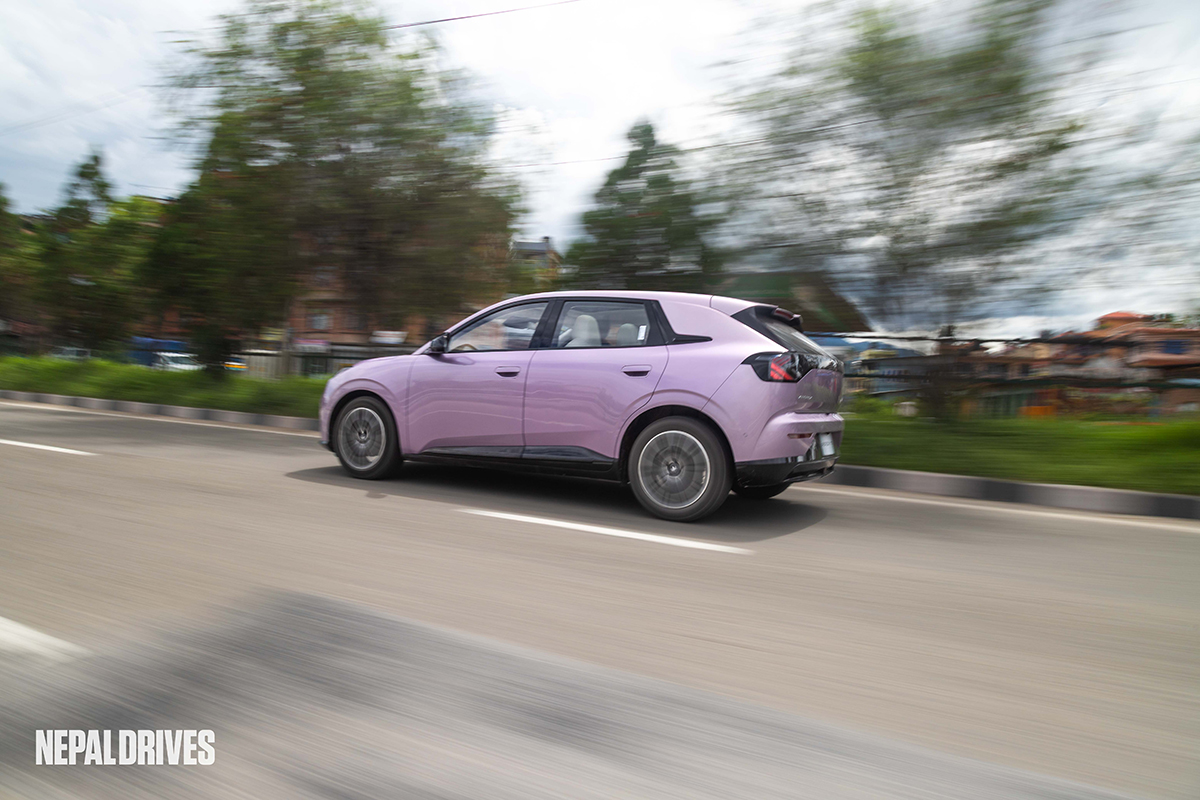
There is enough compliance to make the car comfortable over normal urban imperfections, although rougher surfaces can expose the limitations of a relatively inexpensive suspension setup.
Again, that isn't particularly surprising. The T1 isn't trying to convince you that it is a sports crossover. It is trying to make everyday driving easy. And in that regard, it does a reasonably good job.
The T1's 42.3 kWh LFP battery is fairly modest. Arcfox quotes a 310 km claimed range for the car. Nepal launch material describes this as WLTP, while some international material refers to the same 310 km figure under WLTC, so the certification terminology isn't completely consistent across markets.
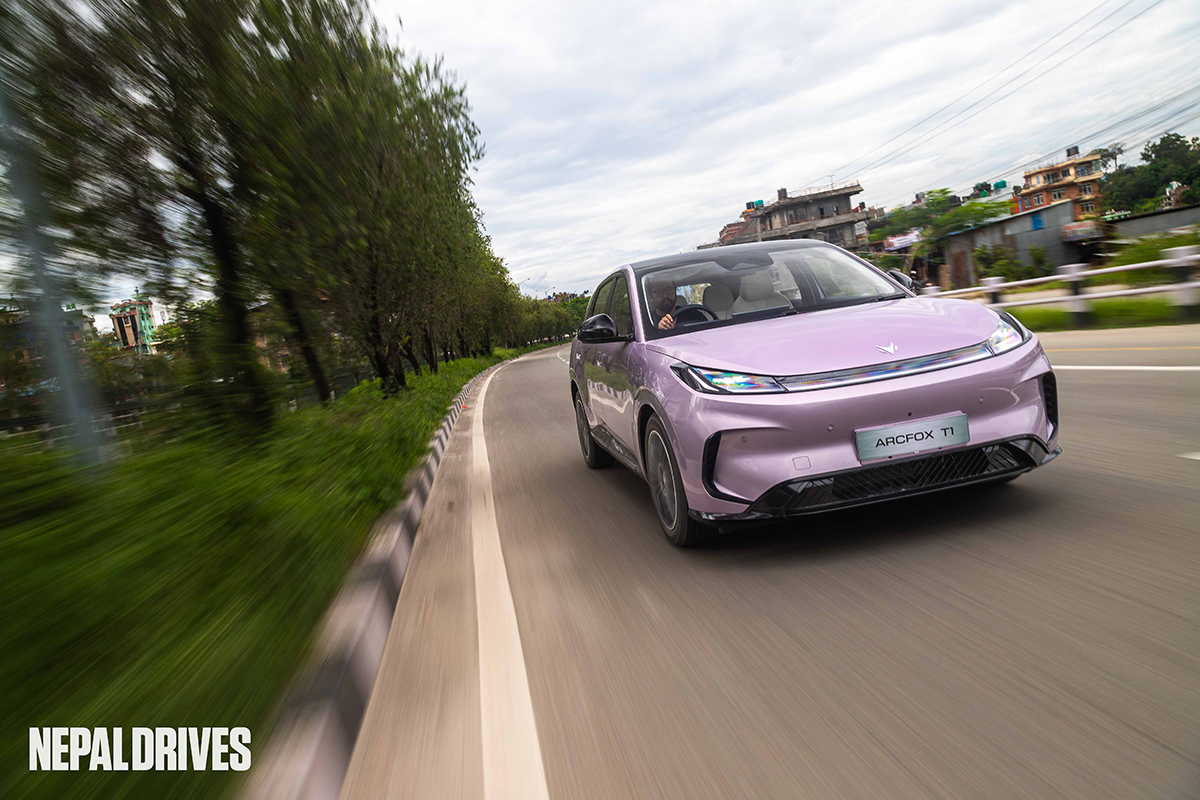
For that reason, the 310 km figure should be treated as a test-cycle number rather than a promise of what you will achieve on every journey.
Charging is reasonably convenient as well. Arcfox quotes 30–80 percent DC charging in around 25 minutes, while a 7 kW AC charger takes approximately eight hours for a full charge.
For an owner who can charge at home overnight, that should make the T1 relatively easy to live with. There is also V2L capability on the T1, allowing the battery to supply power to external equipment.
VERDICT
This is perhaps where the T1 becomes more interesting than its specification sheet initially suggests. It isn't particularly fast. It doesn't have the most sophisticated interior materials, and its battery isn't particularly large. Yet none of those things necessarily prevent it from being a useful car.
The dimensions are manageable for city use, the rear cabin is spacious, the boot is useful and there is plenty of equipment to keep both the driver and passengers occupied. The LV3's additional ground clearance is also a welcome advantage on Nepal's roads. The bigger unknown is the badge.
Arcfox is the premium EV brand under the BAIC Group, while Laxmi Motorhub is handling the brand in Nepal. For buyers, the car itself is only part of the ownership equation. Parts availability, service quality, software support, battery performance over many years and, eventually, resale value will tell us much more about the T1 than a specification sheet can.
That isn't an indictment of the car. It is simply the reality of buying into a relatively new automotive brand. Those questions will take time to answer.
For now, the Arcfox T1 makes a fairly straightforward proposition: a modern electric family car doesn't have to cost a fortune to give you most of the things you actually want. And in Nepal's increasingly competitive EV market, that is an argument worth paying attention to.



Yamaha XSR155: A Lot to Like, A Little More to Want
Hyundai Ioniq 9: A Living Room on Wheels
Suzuki eVitara: Suzuki's Electric Debut